Gravel on a Budget: Why the 2026 Ozark Trail G.1 Explorer Defies the $1,000 Rule
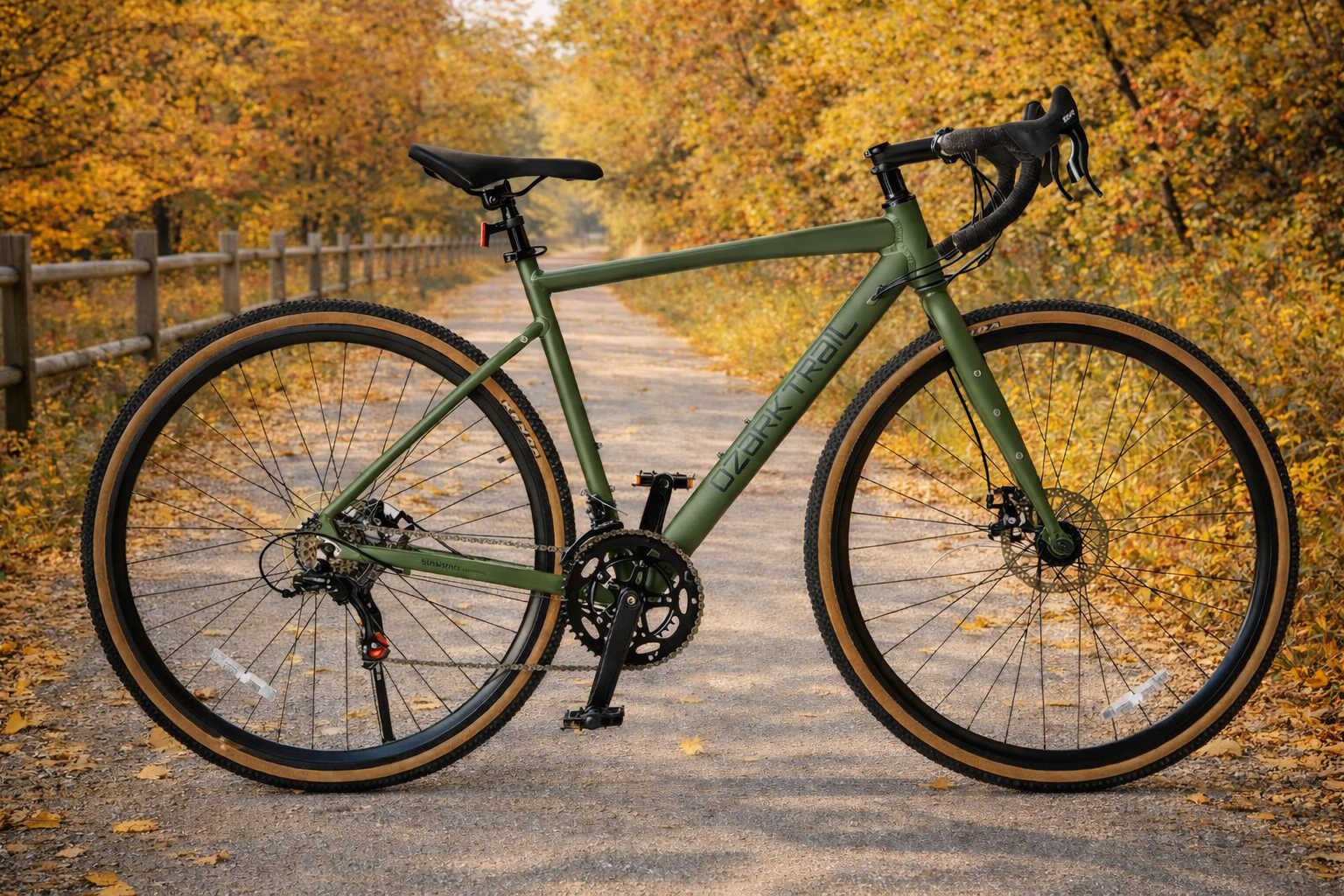
The contemporary bicycle market is currently navigating a period of significant bifurcation, characterized by a rapid escalation in the price of premium equipment and a simultaneous, technologically driven democratization of entry-level platforms. Historically, the "gravel" category defined by drop bars, high-volume tires, and relaxed geometry has been gated behind a four-figure entry price, largely due to the complexity of integrated shifting systems and the demand for lightweight, disc-brake-compatible frames. The 2026 Ozark Trail 700C G.1 Explorer Drop Bar Gravel Bike represents a critical disruption in this market segment, attempting to deliver a multi-surface platform at a retail price significantly below the traditional $1,000 floor. This analysis provides an exhaustive review of the mechanical, economic, and practical dimensions of the G.1 Explorer, with a specific focus on its viability as a multi-year commuter and recreational trail machine.
The Structural Foundation: Frame Engineering and Geometry
The heart of the G.1 Explorer is its 6061 aluminum alloy frame, a material choice that has become the industry standard for balancing weight, durability, and manufacturing efficiency. Aluminum, unlike carbon fiber, offers a predictable failure mode and robust resistance to the incidental impacts common in neighborhood commuting and trail riding. The frame utilizes hydroformed tubing to optimize the strength-to-weight ratio, particularly at high-stress junctions such as the head tube and the bottom bracket shell.
Aluminum Alloy Selection and Heat Treatment
The choice of 6061 alloy is significant for longevity. This specific alloy is heat-treated to a T6 temper, providing a high tensile strength that allows for thinner tube walls without compromising structural integrity. For those intending to keep the bicycle for many years, this material provides a high level of corrosion resistance compared to entry-level steel (hi-ten) frames often found at this price point. Furthermore, the frame’s internal cable routing serves a dual purpose: it maintains a clean aesthetic and, more critically for the commuter, protects the mechanical control cables from the ingress of moisture, salt, and road grit. This protection is a primary factor in extending the service intervals of the drivetrain and braking systems.
| Specification | Metric / Detail |
|---|---|
| Frame Material | 6061 Aluminum Alloy |
| Fork Material (2026 Version) | Aluminum Alloy |
| Frame Size (Medium) | 54 cm |
| Cable Management | Internal Routing |
| Weight (Stock) | 30.4 lbs |
| Mounts | Integrated Nutserts (Fork and Frame) |
The geometry of the G.1 Explorer is categorized as "all-road/gravel," which implies a more upright stack-to-reach ratio compared to traditional road racing bicycles. The medium frame features a wheelbase of approximately 1035mm and a head tube angle of 70.5 degrees, which prioritizes stability over aggressive cornering. This stability is essential when navigating light trails or carrying groceries, as it prevents the "twitchy" steering characteristic of race-oriented bikes.
The Fork and Steer Tube Assembly
One of the most notable technical shifts in the 2026 model iteration is the transition from a heavy steel fork to an aluminum alloy fork. This change significantly reduces the "unsprung" weight of the front end, making the bike more responsive to rider input and easier to lift over curbs or obstacles during urban commutes. The fork is designed with integrated "nutserts," allowing for the installation of front racks or specialized cargo cages, a feature often absent on bikes costing three times as much.
Drivetrain Dynamics and Mechanical Efficiency
The drivetrain of the G.1 Explorer is a hybrid system utilizing components from L-TWOO and Shimano, a strategic configuration designed to offer 14 speeds (2x7) while maintaining an ultra-low price point. In cycling mechanics, the drivetrain is the most complex subsystem and the one most susceptible to wear over many years of service.
Component Interoperability and Shifting Mechanics
The use of L-TWOO integrated shift/brake levers (brifters) is a primary cost-saving mechanism. Unlike traditional bar-end or downtube shifters found on vintage budget bikes, these allow the rider to change gears without removing their hands from the hoods, a critical safety feature for commuting in traffic. The 2-speed L-TWOO R5007 front derailleur manages the chain across two chainrings, while the Shimano Tourney TZ500 rear derailleur handles the 7-speed rear progression.
The Shimano Tourney series is arguably the most ubiquitous rear derailleur in the world. While it lacks the "clutch" mechanism found on high-end gravel derailleurs to prevent chain slap, it is highly durable and remarkably simple to index. For the rider committed to long-term maintenance, the Tourney is an ideal starting point because replacement parts are inexpensive and readily available at almost any bicycle shop.
The Evolution from Freewheel to Cassette
A pivotal technical upgrade identified in the latest G.1 Explorer models is the transition from a threaded freewheel to a freehub/cassette system. To understand the importance of this for longevity, one must consider the physics of the rear axle. In a freewheel system, the bearings on the drive side are positioned further toward the center of the axle, creating a large "overhang" that is prone to bending under heavy loads. In contrast, a freehub system positions the bearings closer to the frame dropout, significantly increasing the structural integrity of the rear wheel.
| Feature | Freewheel (Old Version) | Cassette (2026 Version) |
|---|---|---|
| Bearing Placement | Inboard (Higher stress) | Outboard (Lower stress) |
| Axle Strength | Prone to bending | High durability |
| Gear Range | 14-28T (Limited) | 12-32T (Wider) |
| Upgrade Path | Very limited | Standardized/Expandable |
This transition means the 2026 model is far better suited for "many years" of use, particularly if you intend to carry panniers or ride over bumpy trails where the rear axle is subjected to repeated vertical stress.
Braking Systems: Safety and Modulation
The 2026 G.1 Explorer is equipped with mechanical disc brakes, utilizing 160mm rotors on both the front and rear wheels. For the commuter, disc brakes offer a massive advantage over rim brakes: they provide consistent stopping power in wet weather, as the braking surface is further from the road spray and mud.
Mechanical Disc Brake Architecture
The specific brakes on the G.1 Explorer are single-piston mechanical calipers. In this design, the cable pulls one pad toward the rotor, which then flexes slightly to contact the stationary pad on the other side. While functional, this system requires more frequent adjustment than dual-piston or hydraulic systems. Reviewers have occasionally described these brakes as "sketchy" or "terrifying" under extreme loads. However, for neighborhood rides and park trails, they are adequate if properly bedded in and adjusted.
The long-term longevity of the braking system is dependent on the quality of the cables and housings. Because the G.1 Explorer uses internal routing, the cable friction is slightly higher than external systems, which can make the brake lever feel "stiff". Upgrading to compressionless brake housing is a common, inexpensive modification that can make these budget brakes feel significantly more powerful and precise.
Thermal Management and Rotor Integrity
The 160mm stainless steel rotors are sufficient for a bicycle weighing 30.4 lbs. For a rider weighing up to 250 lbs, these rotors can handle the heat generated by moderate descents. However, in "bikepacking" scenarios where total system weight exceeds 300 lbs, mechanical disc brakes can reach their thermal limits quickly. You should be aware that the mechanical advantage of these brakes is lower than hydraulic systems, meaning more hand strength is required for emergency stops.
Wheelset and Tire Performance: The Interface with the Terrain
The wheelset is often where budget bicycles see the most significant cost-cutting. The G.1 Explorer utilizes double-wall alloy rims, which provide better impact resistance than the single-wall rims typically found on "department store" bikes.
The Move to 45mm Tire Volume
In the latest 2026 iteration, the G.1 Explorer has transitioned from 40mm to 45mm tires. This increase in volume is a critical insight for the trail rider. A 45mm tire can be run at lower pressures, allowing the tire to deform over rocks, roots, and potholes. This provides a "pneumatic suspension" effect that compensates for the rigid aluminum frame and fork.
| Tire Specification | Detail |
|---|---|
| Size | 700c x 45mm |
| Brand | Kenda (Typically) |
| Bead Type | Wire Bead |
| Side Walls | Soft/Gum Wall |
While the tires are voluminous, the 300-mile test conducted by field experts indicates they are "flat-prone" when ridden aggressively on jagged gravel. For your intended use in the neighborhood and park, this is less of an issue. However, for "many years" of durability, the tires should be viewed as a consumable item. Upgrading to a tire with a more robust puncture protection belt, such as the Specialized Pathfinder or WTB Riddler, would significantly improve the bike's reliability.
Hubs and Axle Standards
The wheels use a traditional quick-release (QR) axle standard rather than the thru-axle standard found on $1,000+ bikes. While QR axles are perfectly adequate for park and trail use, they require more care when reinstalling the wheel to ensure the disc rotor does not rub against the pads. For a commuter who may need to remove a wheel to fix a flat or transport the bike in a car, the QR system is simple and requires no tools, but it lacks the absolute stiffness and alignment precision of thru-axles.
Weight, Ergonomics, and Rider Experience
The most significant "con" of the Ozark Trail G.1 Explorer is its weight. At 30.4 lbs, it is roughly 7 to 8 lbs heavier than an entry-level gravel bike from a dedicated brand like Trek or Specialized. This weight is distributed primarily in the heavy wheels, steel components (like the seatpost and handlebars), and the frame's thick-walled tubing.
The Physics of Heavy Bicycles
The impact of this weight is felt most acutely when climbing hills or accelerating from a stoplight. To quantify this, we can look at the power-to-weight ratio. A rider producing 150 watts of power on a 22 lb bike will reach the top of a hill significantly faster than the same rider on the 30 lb G.1 Explorer. However, if you are riding with family in the park or neighborhood, this weight penalty is arguably an advantage for fitness, as it increases the caloric burn for the same distance traveled.
Geometry and Fit for the Medium Frame
The medium frame is designed to fit riders from 5'5" to 5'10". The "drop bar" configuration provides multiple hand positions: the "tops" for upright cruising, the "hoods" for general riding and braking, and the "drops" for stability and aerodynamic efficiency. The 15-degree flare of the handlebars is a modern gravel-specific touch that widens the rider's stance in the drops, providing better leverage when descending on loose surfaces.
For the commuter, the drop bars can feel intimidating initially. However, once adjusted, the hoods provide a neutral wrist position that reduces numbness over longer 10-15 mile rides. It is critical that you adjust the saddle height and handlebar angle to avoid common repetitive strain injuries.
Longevity: Engineering a Walmart Bike for a 10-Year Lifespan
Your desire to make this bike last "many years" is feasible, but it requires a fundamental shift in how the bike is treated. At this price point, the quality of the initial assembly is the primary determinant of long-term survival.
The Challenge of Big-Box Assembly
Unlike bikes sold at Local Bike Shops (LBS), which are assembled by certified mechanics, Walmart bikes are often put together by general retail staff. This often leads to improperly tensioned bearings, dry (unlubricated) threads, and misaligned derailleurs. To achieve longevity, you must either be "mechanically inclined" or take the bike to a professional for a "New Bike Tune-up" immediately after purchase.
Comprehensive Maintenance Protocol
To ensure the G.1 Explorer reaches its potential lifespan, the following maintenance schedule is recommended for a high-usage commuter.
| Component | Daily / Every Ride | Monthly / 500 Miles | Yearly / 5000 Miles |
|---|---|---|---|
| Drivetrain | Visual check for grit | Degrease and Re-lube | Replace Chain (prevents cog wear) |
| Brakes | Squeeze test for tension | Inspect pad wear | Replace cables and housings |
| Tires | Check PSI (printed on wall) | Inspect for glass/debris | Check for dry rot/cracking |
| Bearings | - | Check for "play" in hubs | Overhaul with fresh grease |
| Frame | - | Wipe down (prevent corrosion) | Inspect for cracks or dents |
A key longevity tip for this bike is indoor storage. Many of the steel fasteners and the disc rotors are susceptible to surface rust if left in the rain. Storing the bike inside a garage or apartment will drastically extend the life of the drivetrain and cable systems.
Analysis of Pros and Cons
The G.1 Explorer is a study in compromise. Its "pros" are primarily economic and structural, while its "cons" are related to refinement and weight.
Pros: The Case for the G.1 Explorer
- Extreme Value Proposition: At $288, the bike costs less than some high-end cranksets. It provides a "real" bike experience for a fraction of the cost of entry-level enthusiast brands.
- Modern Standards: By utilizing internal routing, disc brakes, and wide tires, it avoids the "dated" feel of many budget bikes.
- Utility and Versatility: The frame and fork mounts make it a better commuter than many road bikes. It can handle fenders, racks, and multiple water bottles.
- Theft Mitigation: For a commuter, the low cost is a security feature. It is less of a target for thieves than a $2,000 Trek or Specialized.
- Cult Support and Community: There is a massive online community of "budget bike riders" who share DIY repair tips and upgrade lists specifically for this model.
Cons: The Barriers to Performance
- Weight Penalty: 30.4 lbs is heavy. This makes the bike less "playful" and more of a "plodder" on long rides or steep trails.
- Refinement Deficit: The shifting is described as "stiff," and the brakes are "noisy" compared to higher-end hydraulic systems.
- Sizing Constraints: With only two sizes (Small and Medium), taller or shorter riders are forced to compromise on fit, which can lead to discomfort over time.
- Component Wear: The "no-name" bearings and cable housings will likely need replacement sooner than those from premium brands.
Comparative Market Analysis: The $1,000 Barrier
It was correctly identified that most drop-bar bikes start at $1,000. However, in the $300 to $900 range, there are several "intermediate" competitors that offer different value propositions.
Competition Comparison Table
| Model | Price (Approx.) | Frame/Fork | Drivetrain | Braking |
|---|---|---|---|---|
| Ozark Trail G.1 | $288 | Aluminum / Aluminum (V2) | 2x7 L-TWOO/Tourney | Mechanical Disc |
| Poseidon X Ambition | $750 | Aluminum / Carbon | 1x10 Advent X | Tektro C550 |
| Triban RC120 | $600 | Aluminum / Carbon | 2x8 microSHIFT | Mechanical Disc |
| Northrock SR1 | $400-$500 | Aluminum / Carbon | 2x9 Shimano Sora | Rim (Linear Pull) |
| Giordano Libero | $450 | Aluminum / Aluminum | 2x8 Shimano Claris | Rim Brakes |
Evaluating the Alternatives
The Poseidon X Ambition is often considered the gold standard of "budget-premium" gravel bikes. For $750, it provides a carbon fiber fork, which is significantly better at damping high-frequency road vibration than the aluminum fork on the Ozark Trail. It also uses the microSHIFT Advent X 1x10 drivetrain, which is simpler and more reliable for actual trail use.
The Triban RC120 from Decathlon is a formidable competitor in Europe and parts of the US. It is roughly 24 lbs (compared to the Ozark’s 30 lbs), making it much faster on the road. However, the Triban lacks a replaceable derailleur hanger; if the derailleur hits a rock and bends the frame, the bike is often unrepairable. The Ozark Trail features a replaceable hanger, making it a "safer" long-term bet for a beginner who might drop the bike.
The Northrock SR1 is a Costco-exclusive that offers incredible drivetrain value (Shimano Sora 2x9). However, it is a road bike, not a gravel bike. It has limited tire clearance and uses rim brakes, which are less effective on trails or in the rain. For your specific "trails" requirement, the Ozark Trail is the superior choice over the Northrock.
Economic Feasibility of Upgrading
A common strategy for Ozark Trail owners is to "buy cheap and upgrade as needed." This allows the rider to start immediately and improve the bike as their skills (or the parts) wear down.
The $1,000 Upgrade Path
Research indicates that a fully upgraded Ozark Trail can rival the performance of a $1,000-1,200 brand-name bike.
- Safety Upgrade ($80): Replace the stock brake calipers with TRP Spyres. These actuate from both sides, providing a "crisp" feel and making adjustments much easier.
- Efficiency Upgrade ($50): Replace the heavy stock seatpost and saddle with lightweight alloy or carbon fiber alternatives from Amazon/AliExpress. This can shave over 1 lb from the bike.
- Durability Upgrade ($100): Replace the stock Kenda tires with tubeless-ready tires and use TPU tubes or a tubeless conversion kit.
- Performance Upgrade ($270): Swap the entire 2x7 drivetrain for a microSHIFT Sword group set. This provides much smoother shifting and a "clutched" derailleur for trails.
Total Investment: $288 (Bike) + $500 (Upgrades) = ~$800. This is still cheaper than a Trek Checkpoint ($1,500+) and results in a bike that is customized to the rider's specific needs.
The Riding Use-Case: Neighborhood, Park, and Trails
If your stated goal is riding with family a few times a week, the G.1 Explorer is perhaps the most logical choice in the market.
Family Riding Dynamics
When riding with family, speed is rarely the primary objective. The heavy weight of the G.1 Explorer is less of a factor when the pace is dictated by children or casual recreational speeds. The stability of the 45mm tires makes the bike feel secure on the grass, light dirt paths, and paved park trails.
Commuting and Grocery Utility
As a commuter, the G.1 Explorer shines. It features "water bosses" for bottle cages and multiple frame mounts for a rear rack. An aluminum frame is perfectly suited for the daily "clatter" of a commute, and the internal cabling ensures the bike continues to shift well even if it isn't cleaned after every rainy ride.
Trail Performance: What are the Limits?
"Trails" can mean many things. On groomed gravel roads, rail-trails, and flat dirt paths, the G.1 is in its element. On "singletrack" (mountain bike trails with rocks and roots), the lack of suspension and the mechanical disc brakes will be the limiting factors. The bike can handle these environments occasionally, but the rider will need to be diligent about checking bolts and spoke tension afterward, as the vibration can loosen fasteners on budget components.
Conclusion: Is the 2026 Ozark Trail G.1 Explorer a Good Purchase?
After an exhaustive analysis of the mechanical specs, consumer reviews, and market competition, the 2026 Ozark Trail G.1 Explorer is an excellent purchase for a budget-conscious commuter and recreational rider, provided a specific set of conditions are met.
Final Recommendations
The G.1 Explorer fulfills the requirement for a drop-bar bike at a fraction of the $1,000 industry floor. To ensure it lasts "many years," you should prioritize the following actions:
- Ensure a Professional Setup: Do not trust the out-of-the-box assembly. Pay a professional mechanic to index the gears, true the wheels, and set the bearing preload.
- Verify the V2 Upgrades: Confirm the bike has the 45mm tires and the cassette hub (not freewheel) before taking delivery. These are the "longevity" features that make the 2026 model superior.
- Invest in Brakes Early: If the bike is used for commuting in traffic, the upgrade to TRP Spyre or Tektro C550 calipers is the most important "safety and longevity" investment that can be made.
- Embrace Maintenance: Because this is a $300 bike, the tolerance of the parts is lower than a $3,000 bike. Regular chain lubrication and tire pressure checks are mandatory to prevent the "rapid wear" reported by some budget riders.
- Acknowledge the Weight: Understand that this bike will be slower and heavier than others in the park. As long as your focus is on family fun and neighborhood utility rather than "gravel racing," the weight is a non-issue.
The G.1 Explorer is a rare example of a "big-box" bicycle engineered with genuine foresight. Featuring a 6061 aluminum frame, internal cable routing, and generous tire clearance, it serves as a legitimate long-term platform for the burgeoning cyclist. While it isn't a racing machine, it has virtually no peers at its price point as a budget-friendly drop-bar commuter.
Have a question or suggestion?
There is more than one way to start a conversation:
- Create a post in our Reddit community.
- Fill out the form.
- Send us an email: info@relbis.com